
Thoughts on Sustainable Jewellery
When I began making jewellery in 2016, ‘sustainability’ was in its infancy as a buzzword. We weren’t assessing the process behind production as we do now. As I began to realise the impact of my craft and as the collective work up to the dire state of the environment, I spiralled into crisis, asking myself what I could do with my hands which doesn’t have an impact on the planet. Hemp woven baskets is the answer (incase you were wondering) but since I didn’t really want to get into weaving baskets, I started to look at how I could make my jewellery process as responsible as possible.
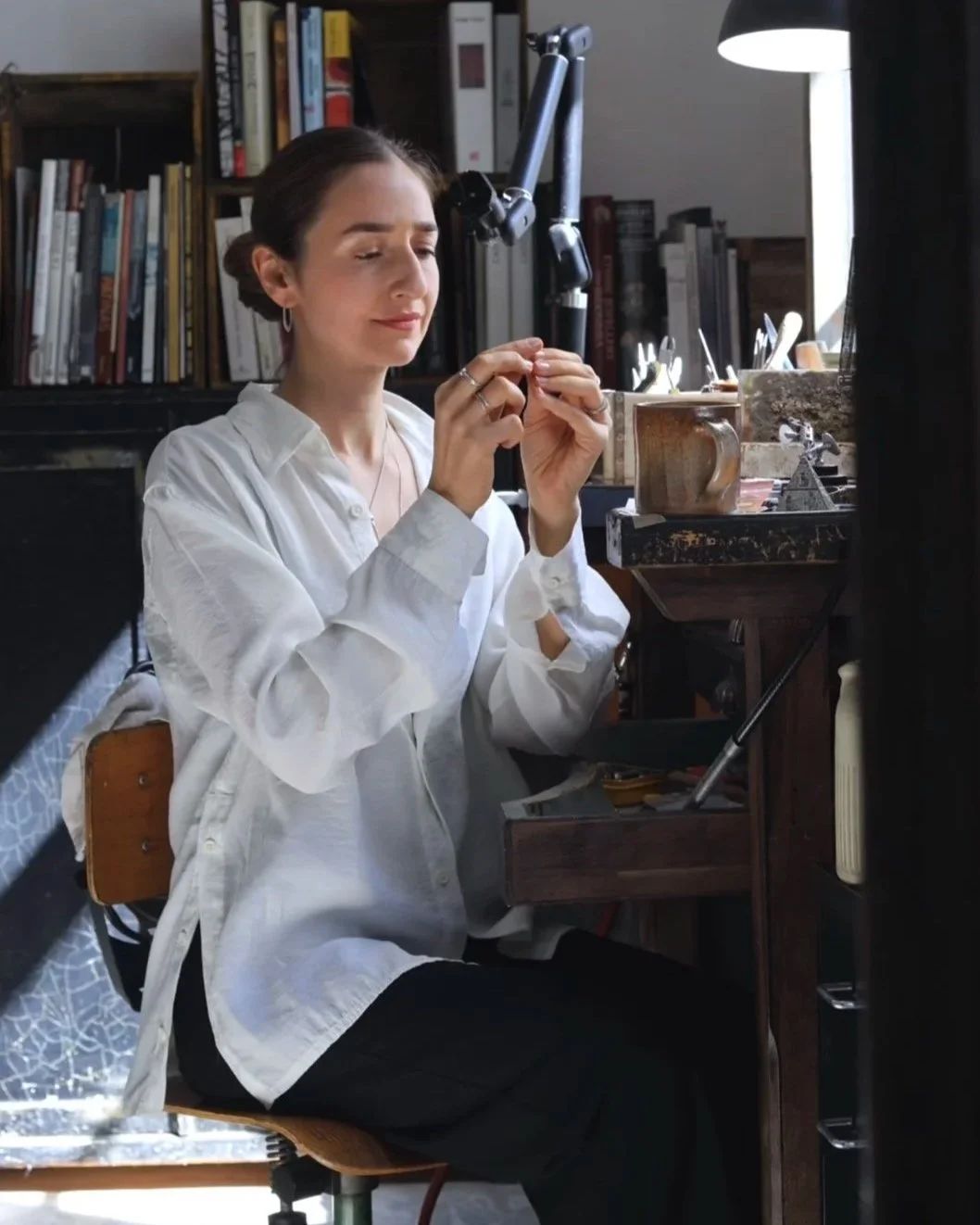
It has not been an easy path but over the years I’ve taken many steps to centre sustainability, ethics and responsibility in my jewellery process.
Let’s go deeper…
Where is the metal sourced from?
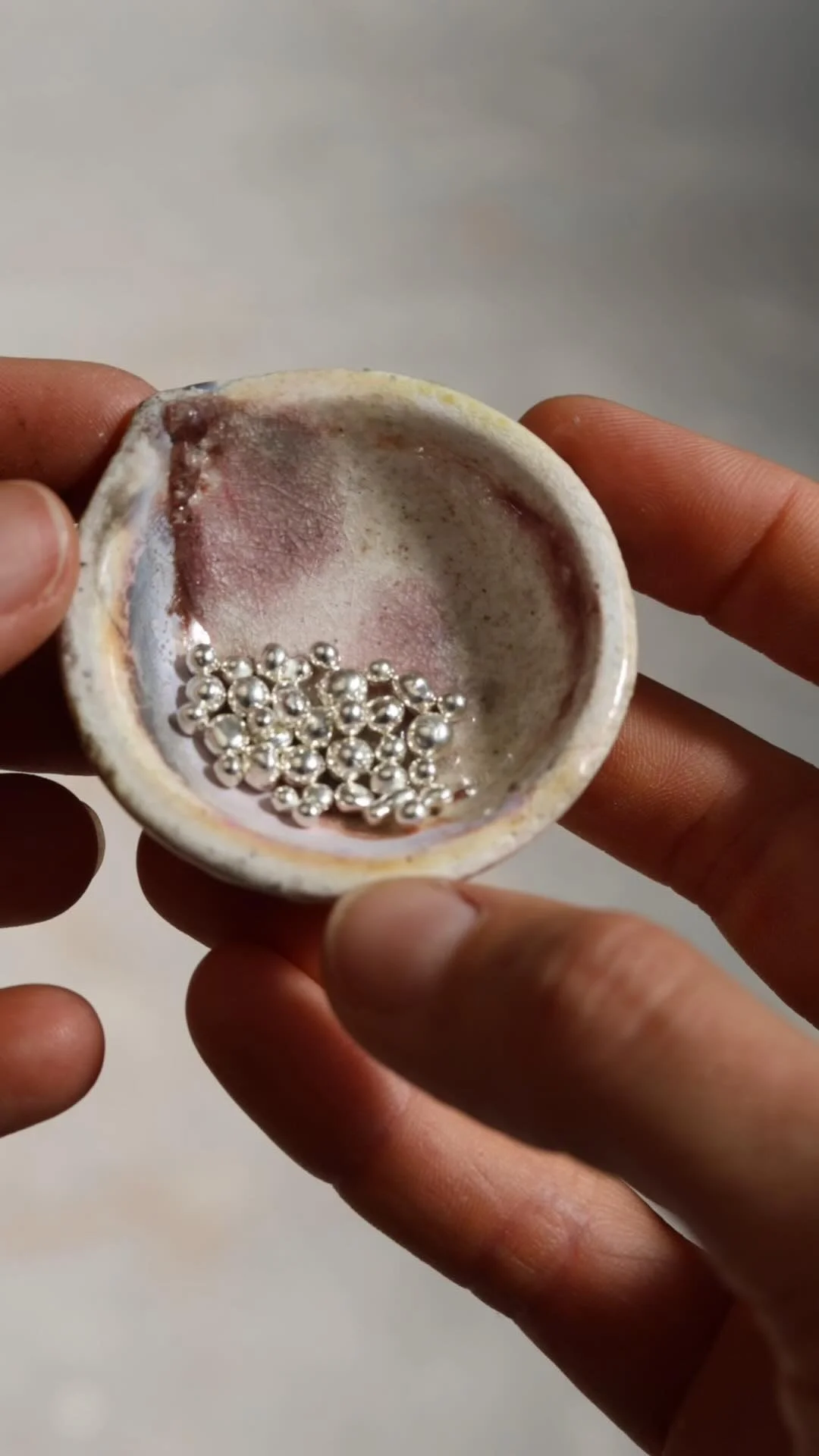
I buy the metal from Cookson Precious Metals, a certified member of the Responsible Jewellery Council. Rather than recycling directly in my workshop, I leave it to the experts who can refine the metal in a way that it has no nickel or cadmium. It arrives by post 100% recycled, clean and ready to use.
I source the chains from the UK, they come from Curteis. I adore that they make chains in the UK from recycled silver but this has become complicated with Brexit so I’m looking for a supplier in the EU. It’s important to me that the chains are good quality, made in Europe and recycled so I’m not in a rush. When the moment is right, I’m sure I’ll find them.
Which is better, Fair Mined metal or recycled metal?
I see this debated a lot. Both Fair Mined and recycled metal are necessary for an ethical future, it shouldn’t be one or the other, we need both. Unfortunately even if we choose to consume only recycled metal, the demand for virgin metal is ever growing and so what I’d really like to see is all mines adhering to a Fair Mined ethos. We need governments to step up and enforce legislation for people and planet.
Something else which is a source of stress and something I never want to see happen is deep sea mining. It’s coming and I’m not sure how I’m going to navigate that. If you stumble across a petition against it, please sign and share.
Who do you buy the gemstones from?
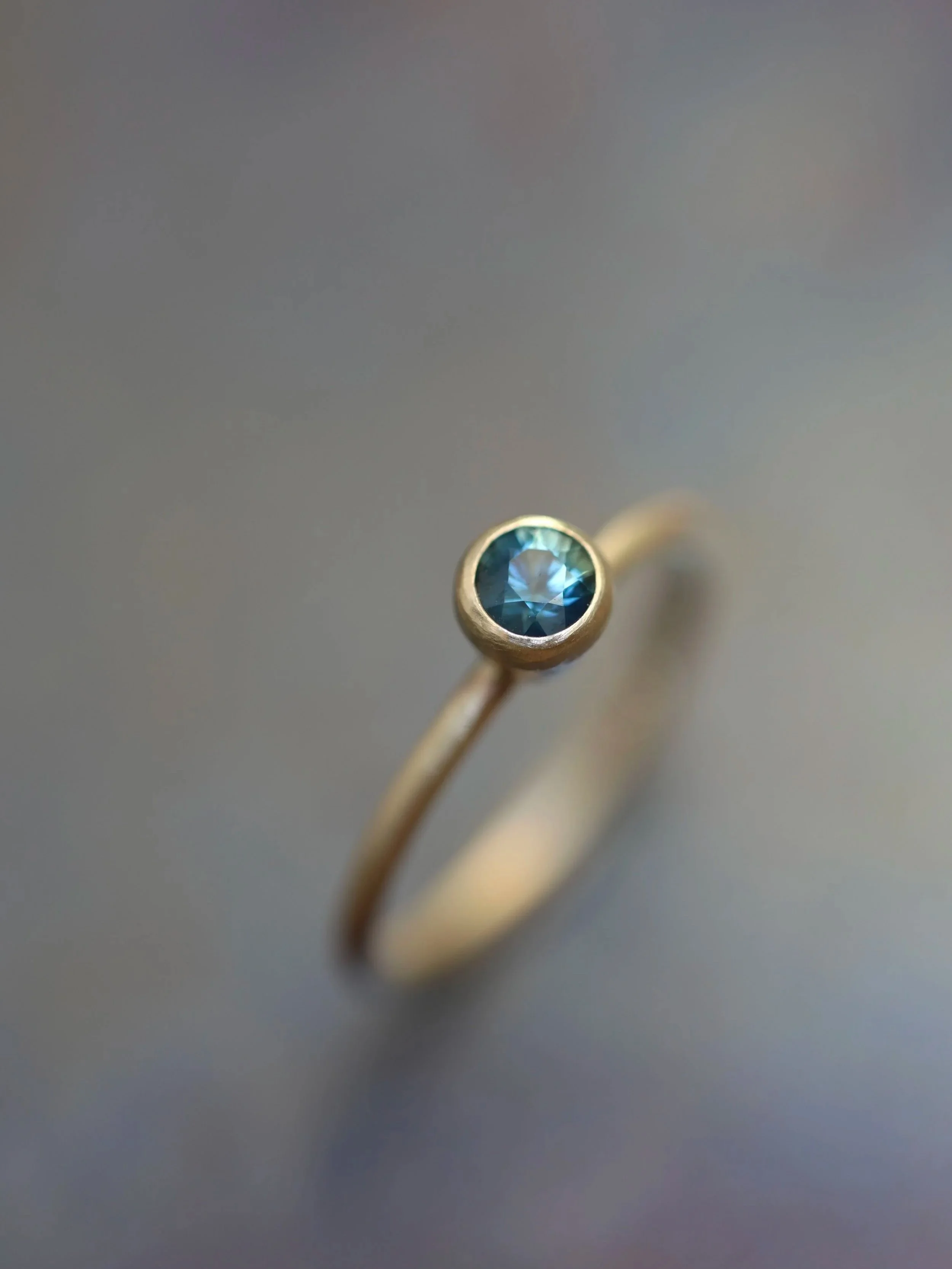
I work with independent gem suppliers with good traceability and ethics. Capricorn Gems, Moyo Gems and Nineteen48 are a few of the projects I love, although I’ve got many more.
The reason I need a variety of gem suppliers is because each provider has a limited supply of stones so I sometimes I need to contact multiple suppliers to find the particular stone, shape or size for the dream piece of jewellery I have in mind.
Where do the gemstones come from?
Gemstones are found all over the world but I’m really select with geographical locations. I favour gemstones from countries which have laws in place to protect the people and the land. Mines are complex working areas and there are lots of considerations like bio residue management and re-wilding of the land.
Sri Lanka has excellent legislation in place to protect the land, North America and Australia have a lot of safety regulations to protect the workers. Hence why I work a lot with sapphires - because they come from these three places. I completely avoid gemstones from countries like Afghanistan (very poor women’s rights), Madagascar (child workers). Ultimately it depends on the project and transparency, but if in doubt, I leave it out.
What about the gas?
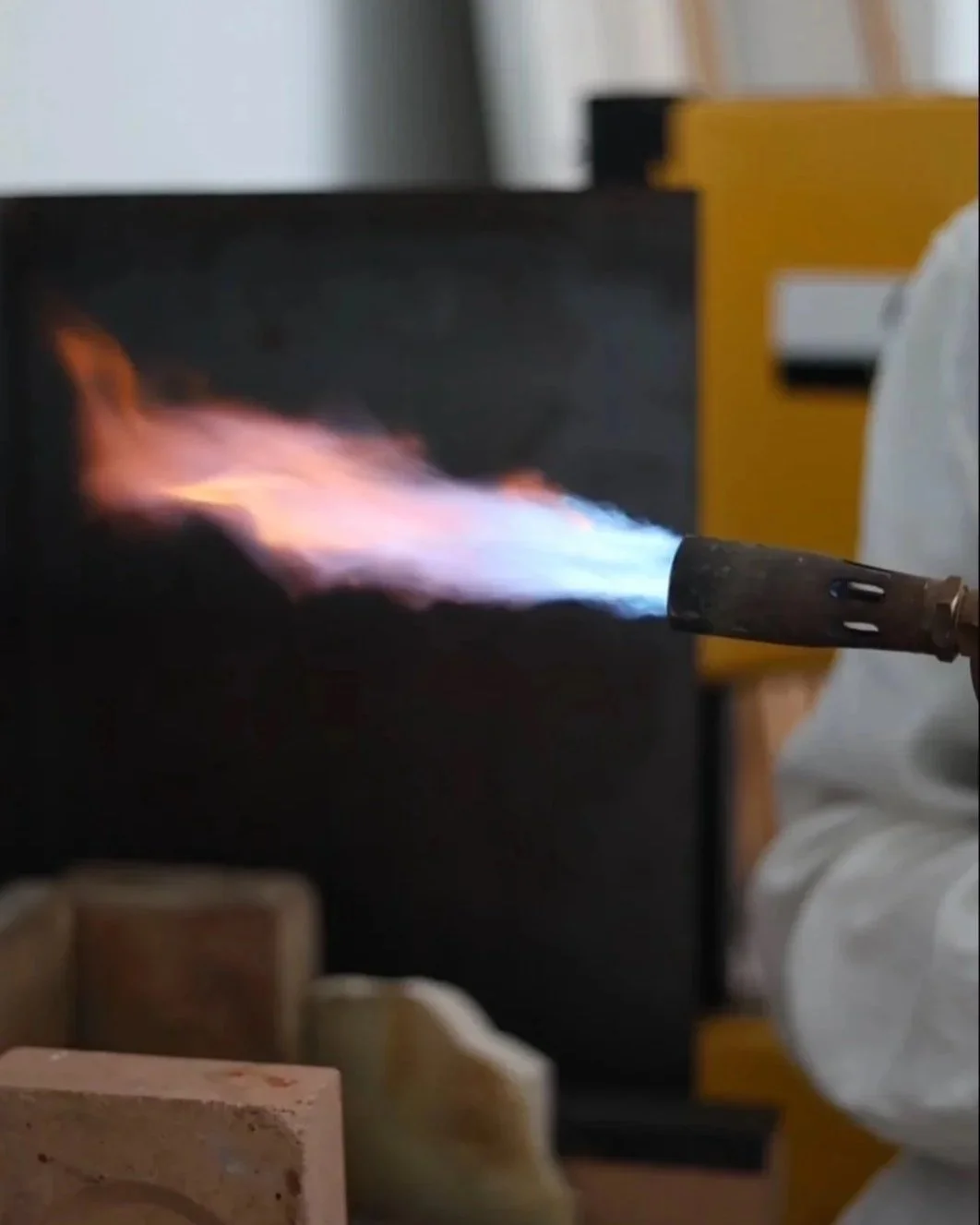
Yes, the elephant in the room - GAS!
Musa Mundi production is very small scale, since I make everything by hand, I go really slowly. Meaning that the carbon emissions are actually quite low. To put it into perspective, I’m using less than 7kg of butane a year at the moment. That equates to 20kg of carbon emissions, that’s the same carbon emission as a 70 mile car journey. Since I’m acutely aware that you can’t just offset and forget about it, I offset a greater amount of 1000kg of emissions per tank.
The carbon is offset with Stand For Trees, they have a variety of forest and biodiversity preservation projects around the world from Borneo to Congo and beyond. I’m hopeful that there’ll be better solutions as time goes on, already the industry is seeing the introduction of green hydro flames made with electricity and water. For now they’re extremely expensive and quite temperamental (needing to be returned to the manufacture outside of the EU for maintenance) but I do have my eye on them.
And the packaging?
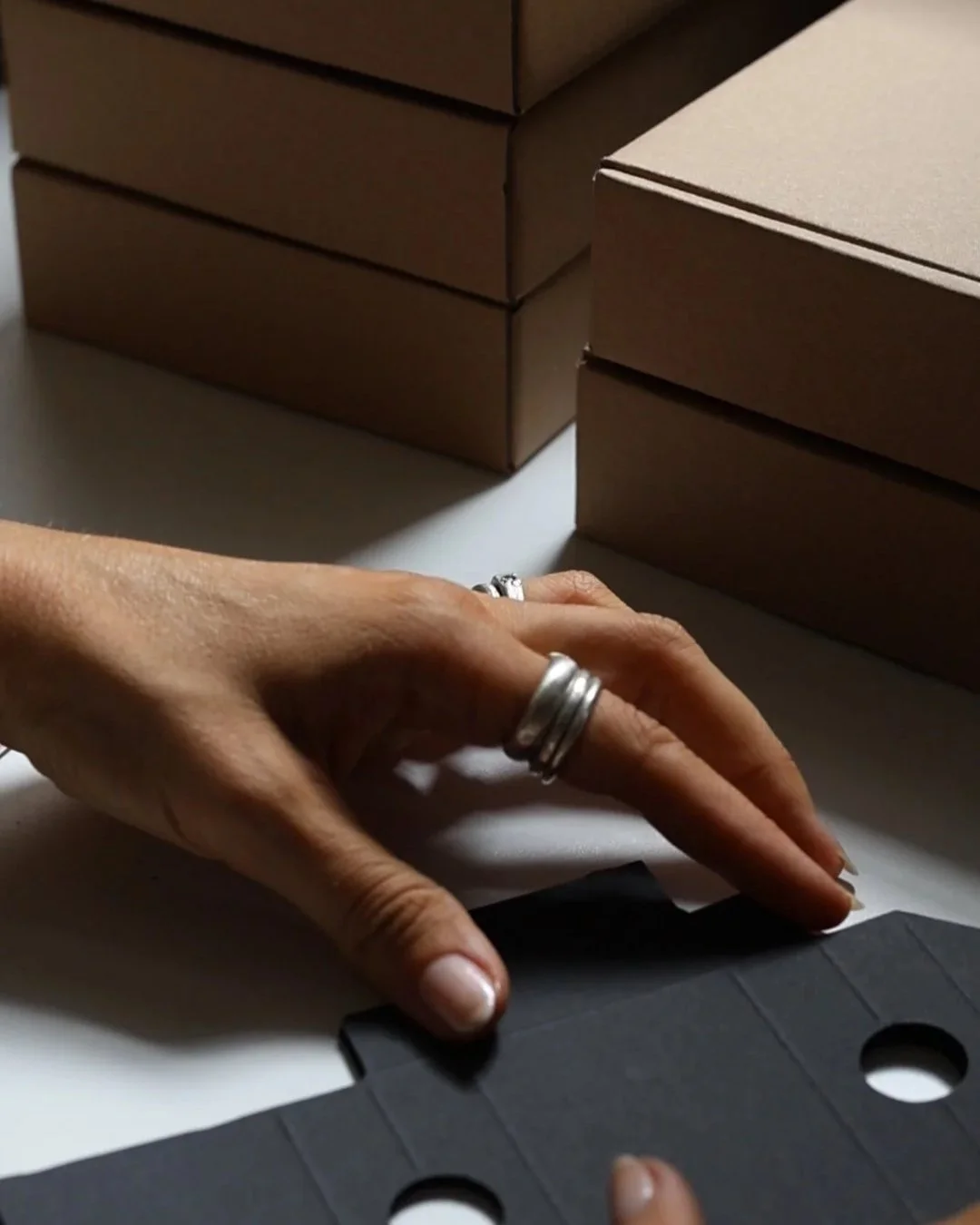
I source my minimal eco friendly packaging from a small family run business which works with renewable energy. They’re made with recycled pulp collected from within Europe. I’d love to see more options with quality eco friendly ring boxes especially for engagement rings. I’ve been so disappointed with the plastic glued tacky boxes that you find at jeweller trade shows. Many suppliers tell me that the eco options don’t sell, supply follows demand unfortunately but I remain hopeful to find an eco friendly upgrade in the future.
I also offer a minimal paper pouch option that allows you to order your jewellery gift box free, it’s had a really positive response and actually most customers choose that option except for when it’s a special occasion.
Anything else to add?
I think the biggest challenge with all of this was finding the way when I started out, I had literally no idea what options were even available, I lost days then weeks researching key words trying to find the most responsible options for everything, there was just a lot going on behind the scenes. The ethical and eco conscious route is almost never the easy one, that said, I’m determined to align my work with my values and deliver good quality, responsible and thoughtful jewellery.
Also, I’d absolutely love to get the B Corp certification but you have to pay for it annually and as a one-woman-show working to keep the Musa Mundi gig going, I’m just not there yet. I will get there eventually though, it’s on my list!